How Lecturers Can Design AI-Ready Assessments
Practical ways to redesign take-home assessments so they still measure a student's own thinking, with clear AI rules and care for student data.
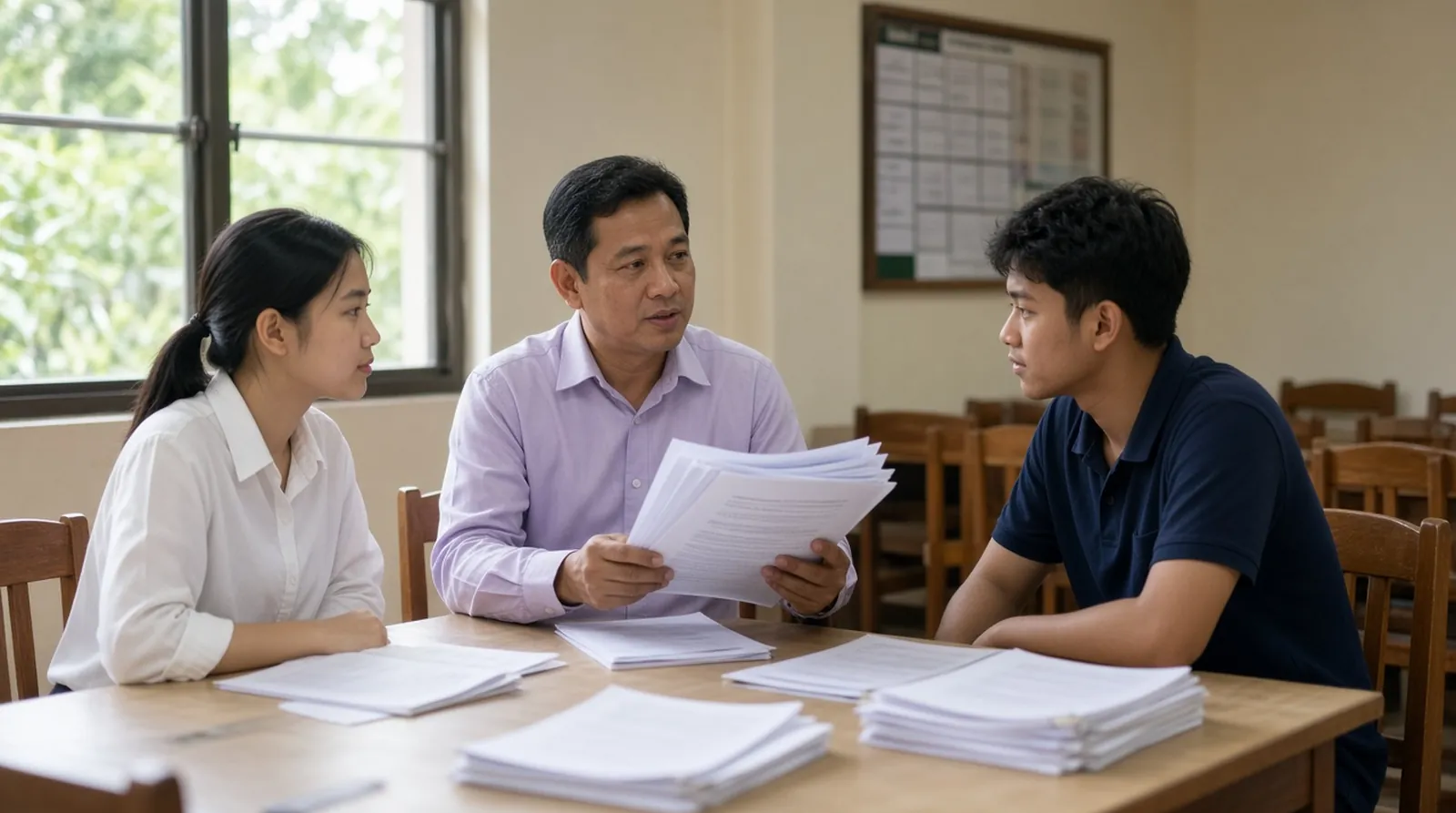
An AI-ready assessment still measures the student’s own thinking. Redesign take-home tasks so that process, judgement and a local or personal context are visible, and write a clear statement of what AI use is allowed, what must be disclosed, and what is not permitted. Do not rely only on detectors, and never paste identifiable student work into a public tool.
- If a chatbot can complete the task in minutes, change the task, not only the invigilation.
- Ask for evidence of process: drafts, working, a short viva, or an in-class critique of an AI sample.
- State AI rules in the brief, in the same plain language you will use in the first class.
- Follow your institution’s assessment and AI policy first, including any rules on student data.
Lecturers do not need to abandon take-home work, and they do not need to pretend generative AI is invisible to students. The more durable approach is to decide, for each task, what must be the student’s own, and to design the brief so that evidence of that work is hard to hide. This sits alongside our practical guide to using AI in teaching and our article on MOHE’s 2024 generative AI guideline. Our AI for Lecturers course draws on the Ministry of Higher Education’s 2024 guideline on using generative AI in teaching and learning, and is not endorsed or accredited by the Ministry.
01Start With The Learning Outcome, Not The Tool
Write one sentence: “By completing this task, the student will show that they can…” If the sentence is “summarise a topic in 1,500 words from general sources”, a chatbot will do that fairly well. If the sentence is “apply this week’s method to a case from our local industry and defend one recommendation”, the student has to bring something a generic model does not have: the case, the method as you taught it, and a defence they can explain aloud.
Keep the outcome stable, then adjust the format. A shorter submission plus a five-minute oral defence can be more rigorous than a longer essay that could have been drafted overnight.
02Five Design Moves That Still Work In A Semester
1. Use a local or classroom-specific case. Give a short brief about a Malaysian company type, a campus data set, a fieldwork note, or a document you issue that week. General tools are weaker when the facts are not in the open internet and the student must use what you supplied.
2. Assess the process, not only the final file. Ask for a brief process note: what the student tried, what they changed, and whether they used a tool. Or collect a first outline in class and compare it with the final submission. The note is part of the mark, not an honour-system footnote.
3. Add a short oral or in-class component. A viva, a poster discussion, or a tutorial in which the student explains one calculation or one paragraph will quickly show whether they own the work. You do not need to viva every script at length; a sample, or a short written follow-up in class, already changes how students prepare.
4. Turn AI into the object of the task, when that fits the outcome. For example, issue an AI-generated answer that contains two deliberate weaknesses, and ask students to correct it against your marking guide. That measures judgement, and it shows students both the usefulness and the limits of the tool.
5. Tight timed work for the skills that must be unaided. Some outcomes still need an in-class test, a lab, or a closed-book exercise. Mix these with open tasks so that the whole module is not a single take-home essay.
03Write The AI Rules Into The Brief
Students should not have to guess. In the assignment brief, include a short box with three lines:
- Allowed: for example, grammar checking on text the student already wrote, or generating extra practice questions.
- Allowed with disclosure: for example, using a tool to suggest a structure, provided the student writes the final argument and names the tool.
- Not allowed: submitting generated text or calculations as their own, or pasting confidential, personal or unpublished exam material into a public tool.
Use the same wording in the learning management system and in your first-week briefing. If your faculty already has a standard statement, use that text rather than inventing a parallel rule.
04Marking And Academic Integrity, Without Over-Relying On Detectors
AI-detection scores can be a prompt to look more closely; they are not, on their own, proof of misconduct. Follow your institution’s integrity procedure, and talk to the student about the work. A process note, a draft history, or a short conversation is usually fairer than a single percentage from a detector.
When you mark, reward the parts a tool cannot easily fake: the link to this week’s method, the use of the issued case, the quality of the critique, and the ability to explain a choice. If those are in the rubric, students can see where to spend their effort.
05Protect Student Data
Do not paste scripts, names, matrix numbers, emails or special-category details into a public chatbot, including when you are drafting feedback or checking a suspicious passage. If your institution provides a managed tool with agreed controls, use that, or describe the issue in your own words without identifiable extracts. Malaysia’s Personal Data Protection Act 2010 (PDPA) is one reason to minimise personal data in tools that have not been approved for that purpose. Your institution’s policy is the rule you follow day to day.
The same caution applies to unpublished exam items. Once a question has been pasted into a public tool, treat it as no longer unseen.
06A Light Change You Can Make This Semester
You do not have to redesign every assessment in one meeting. Pick the take-home task that is most at risk, add a process note and a local case or a short in-class defence, and tighten the AI statement in the brief. Review the first marked batch: if the new evidence made it easier to see each student’s thinking, keep the change and apply it to the next module.
A small library of teaching prompts can help you draft cases and critique tasks; see our AI prompts for lecturers. Edit those drafts against your syllabus before they reach students.
07Frequently Asked Questions
Does an AI-Ready Assessment Mean Students Cannot Use AI at All?
No. It means you decide, and you state, where AI is allowed, where it must be disclosed, and where the work must be unaided. Some tasks will ban it; others will require students to critique or improve an AI draft.
Are AI Detectors Enough to Protect Integrity?
No. They may support a review, but they should not be the only evidence. Design, disclosure, process work and a conversation with the student are more reliable, and they align better with most institutional procedures.
Can I Use AI to Help Mark Scripts?
Only if your institution allows it, and never by uploading identifiable student work into a public tool. You remain responsible for the mark and the feedback.
Where Do National Guidelines Fit In?
Follow your institution’s policy first. The Ministry of Higher Education’s 2024 generative AI guideline is a national reference for teaching and learning in higher education. It does not replace faculty rules, and it does not endorse a particular course or tool.
If you want structured practice on assessment design and classroom use of AI, you can view the AI for Lecturers course and register your interest. Other short courses are listed on our courses page. Axis Skill Academy is an independent training provider. This course is not endorsed or accredited by the Ministry of Higher Education.
This article is general information, not legal advice.

Practical Excel, Power BI and AI training for working teams in Malaysia, in public classes or in-house at your company.
More From The Blog

MOHE’s 2024 GenAI Guideline For Lecturers, Explained
A plain-language guide to the Ministry of Higher Education's 2024 generative AI guideline for teaching and learning, and how lecturers can apply it in…
Read article
AI Prompts For Lecturers: A Practical Starter Library
A short library of teaching prompts for lesson planning, practice questions, feedback and assessment checks, with a pattern you can reuse next semester.
Read article
Using AI in Teaching: A Practical Guide for Malaysian Lecturers
Practical, responsible ways for Malaysian lecturers to use AI tools for lesson planning, assessment design and academic integrity, while keeping student data protected.
Read article